The summer has rolled on to August, and more plants are preparing for harvest. Our days and nights are cooling off this week, which encourages us to plant peas, spinach, and other leafy greens that will thrive in the cool weather ahead. Read below to stay tuned and join in with Succotash Gardens this weekend!
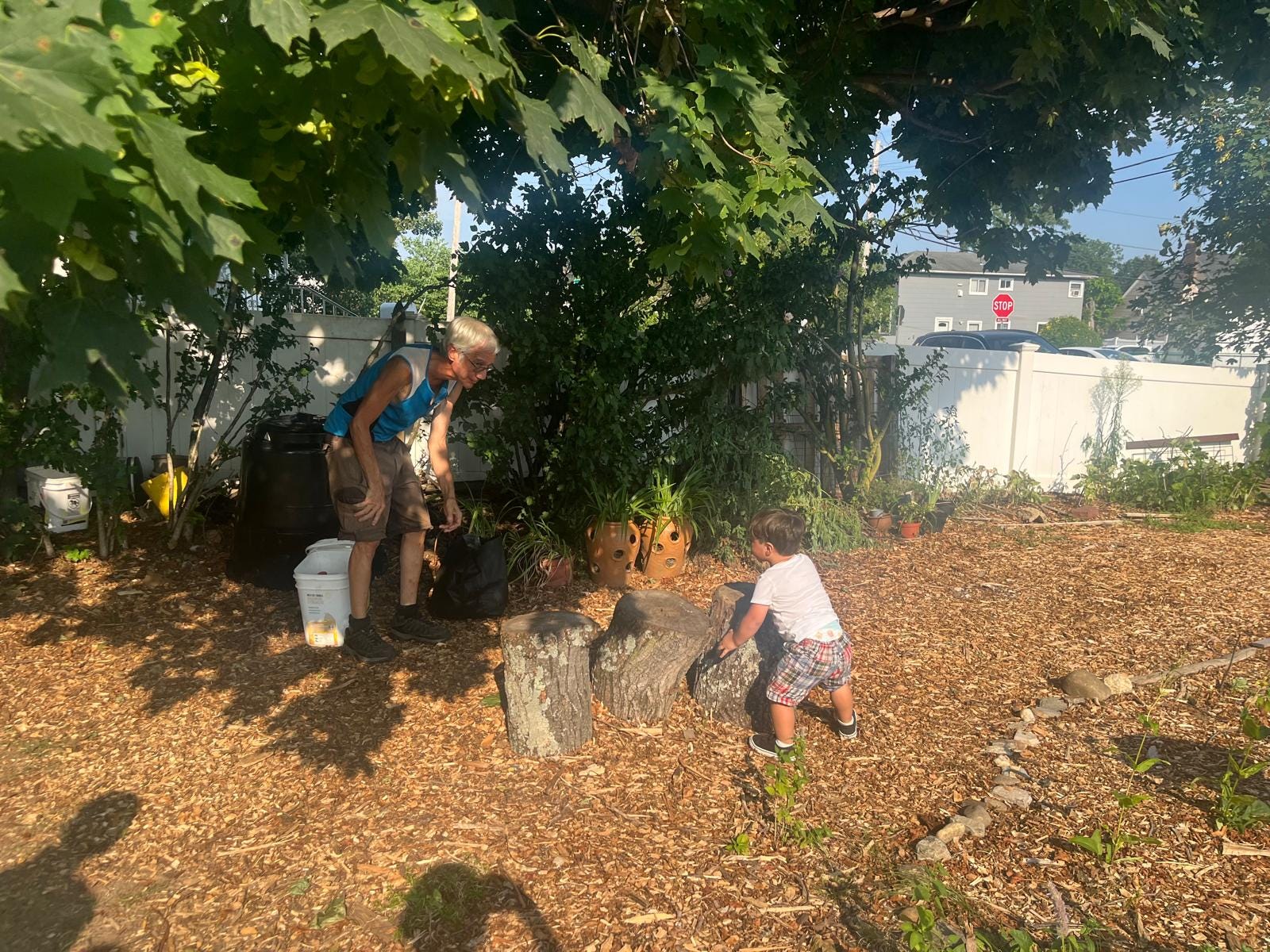
Isaac, a baby of the community, likes to test his limits, jumping and balancing atop our wood log seats. Scott, an elder, watches carefully but doesn’t interfere.
Saturday, Aug 9th, 9am to 12noon
Join us in the garden to water, fertilize, and harvest. We are harvesting squash, okra, and kale! Please bring water and be mindful to stay healthy as the summer gets hotter.
Black VegFest, 12noon - 7pm
Directly after our community workday, we’re heading to NYC’s Annual Black VegFest where we will enjoy plant-based eats, live performances, wellness workshops, and community power. Register here!
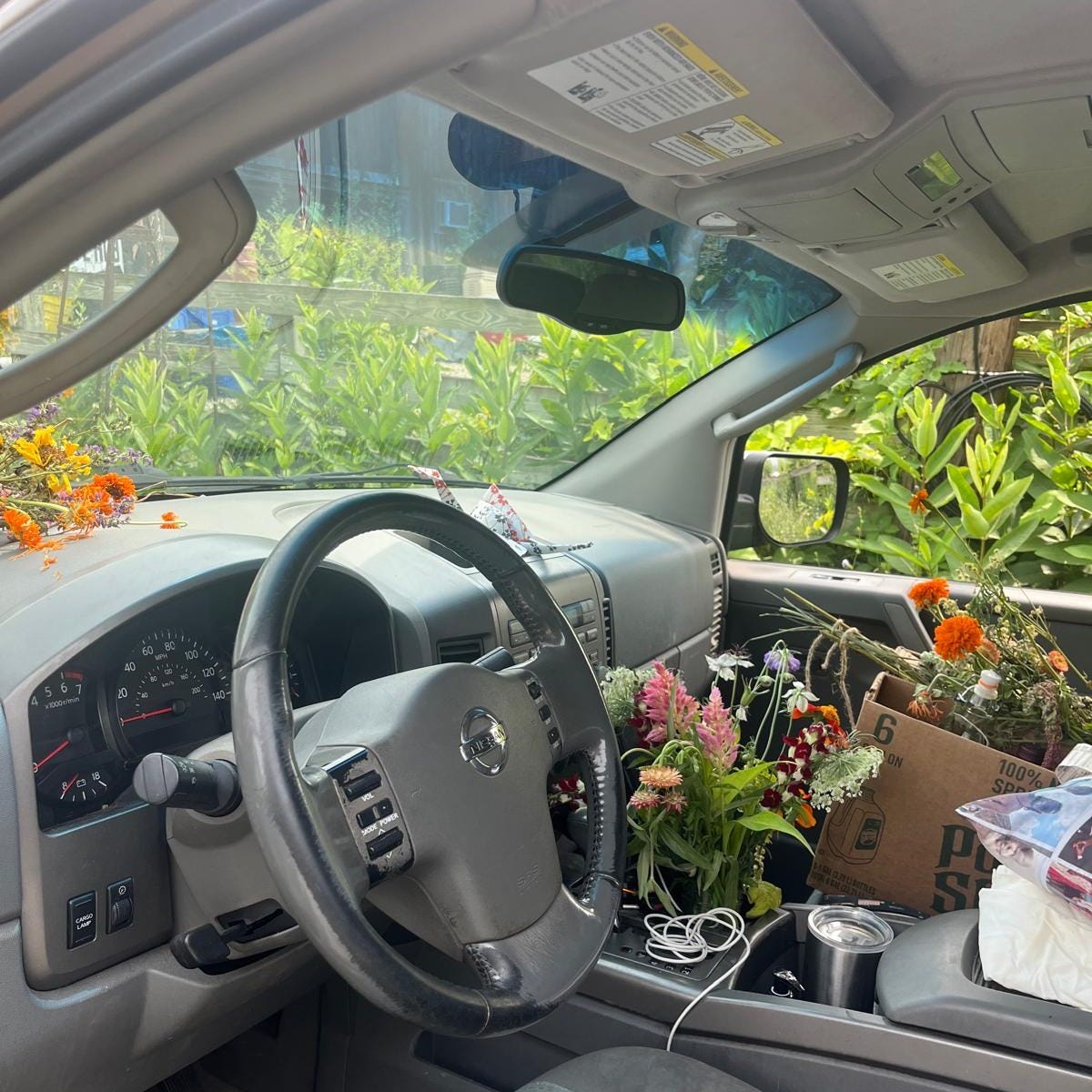
Let us know if you need transportation support. We have space in the garden truck for carpooling to BK or to the Freeport train station.
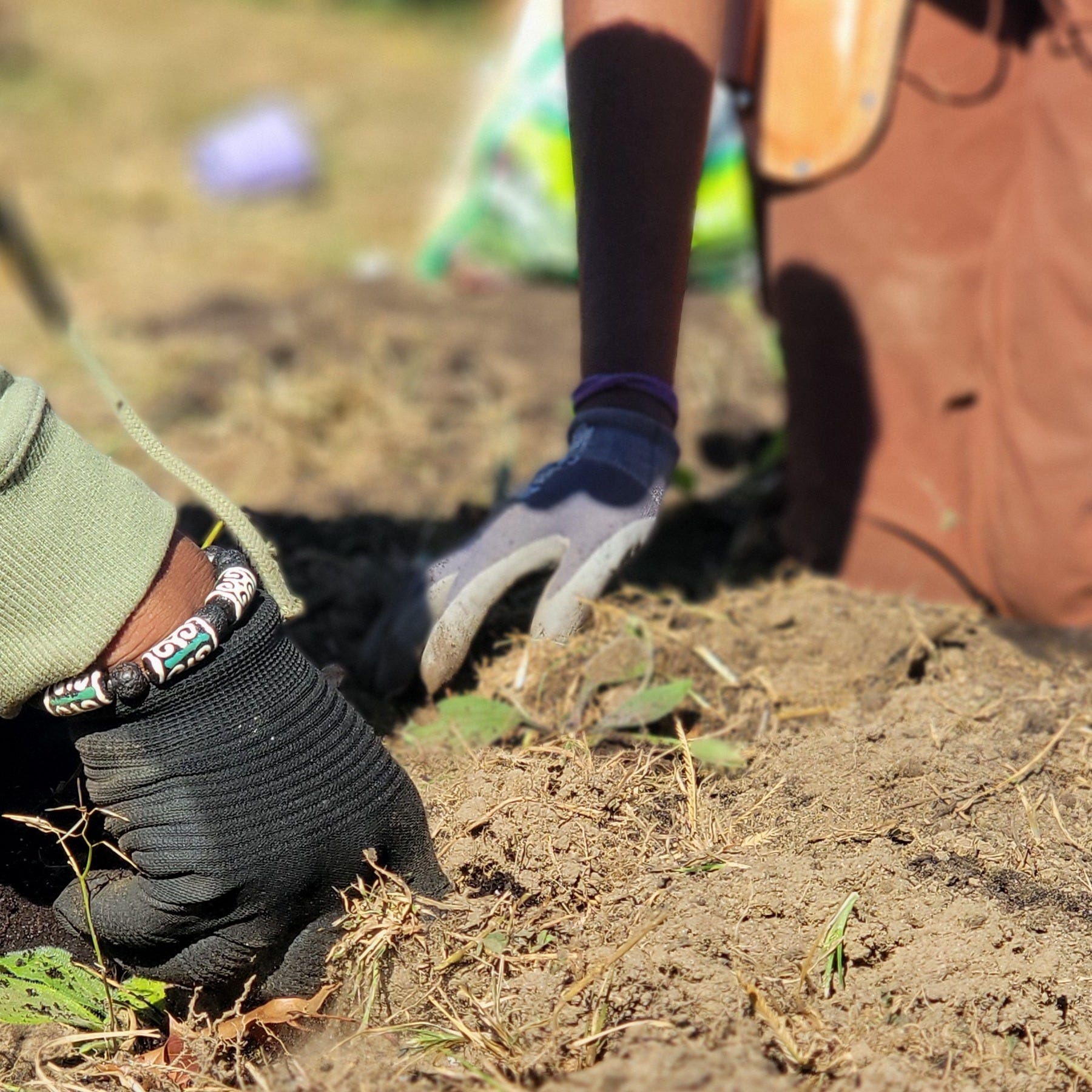
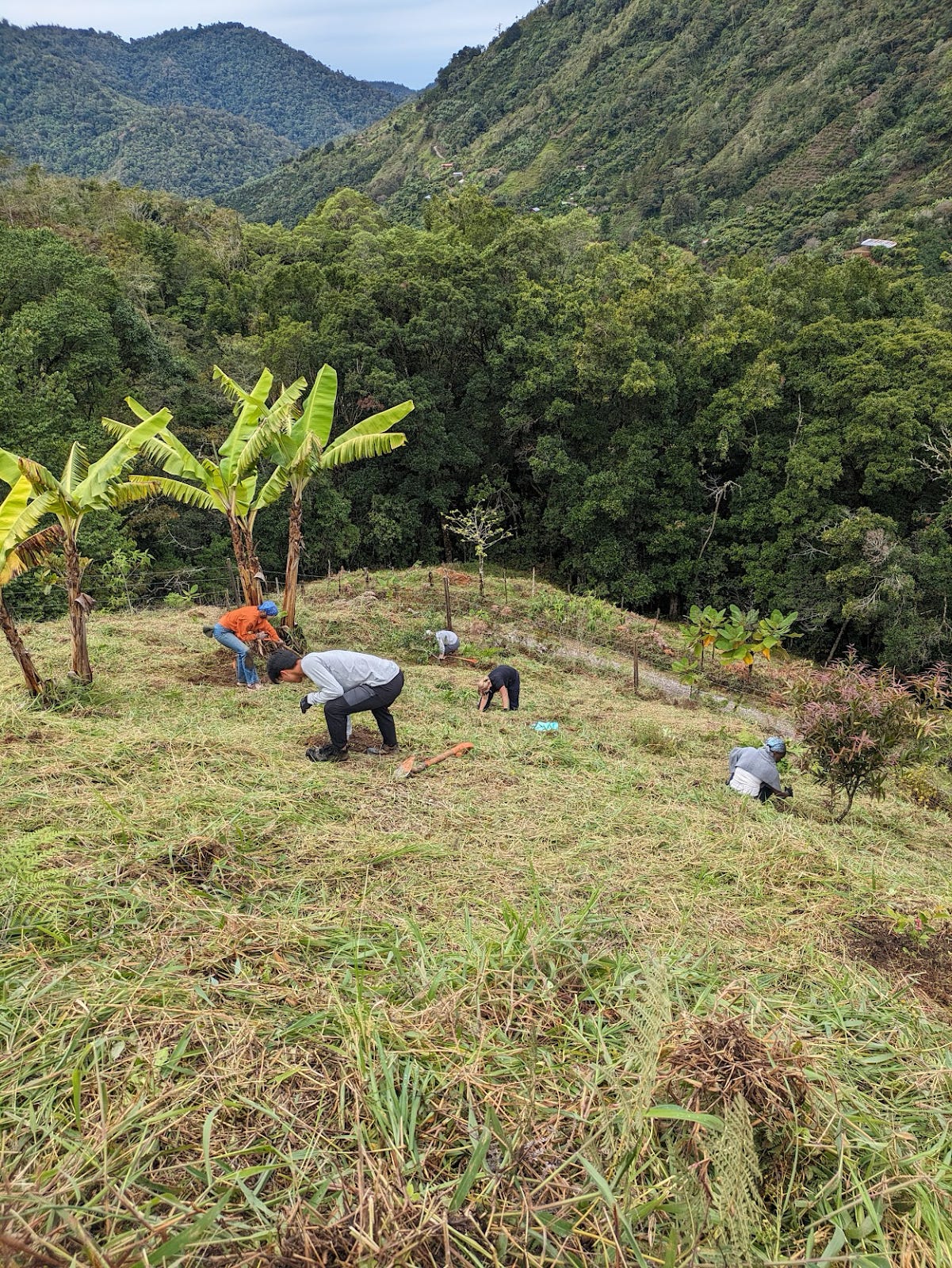
Our degraded soils right before planting 50 native plants.
Community Creates
This section of the newsletter is dedicated to an open forum where community members can submit their musings, poetry, or art to be shared. If you would like to submit, please reach out to Nailah (nailahgarard@gmail.com).
Reading Chapter four of Farming While Black, “Restoring Degraded Land,” resonated deeply with me, not only as an aspiring environmentalist but also as someone who has witnessed land degradation firsthand during my time volunteering in the mountainous region of Costa Rica. Last June and July, I worked with Green Communities (https://greencommunities-cr.org/), an organization that focuses on sustainable agriculture, forest conservation, and eco-tourism in the town of Providencia. The parallels between the work we did in Costa Rica and the land restoration strategies described by Leah Penniman at Soul Fire Farm were striking.
In Costa Rica, I saw the consequences of modern, industrialized farming methods that Penniman warns against, methods that may appear “efficient” or “clean,” but in reality strip the soil of life. Many of the conventional coffee farms in the region rely on chemical fertilizers and pesticides that wash into the Savegre River, the very water source people use to drink, bathe, and generate hydroelectric power. This river, once considered the clearest in Central America, is now vulnerable to degradation because of unsustainable farming upstream.
Just as Penniman emphasizes the importance of soil health and biodiversity, I learned in Costa Rica that healthy soil is alive. It smells rich and earthy, holds moisture well, and is teeming with microorganisms that support the growth of plants and the stability of ecosystems. In contrast, “clean” coffee farms, cleared of trees, reliant on synthetic fertilizers, and devoid of insect life, are making farming more precarious and less compatible with local ecosystems. In The Grind Over Sun Coffee, Salveson even notes that the removal of forest canopy on these farms creates inhospitable conditions for migratory birds that once found refuge there. What is marketed as “modernization” is, in truth, ecological degradation.
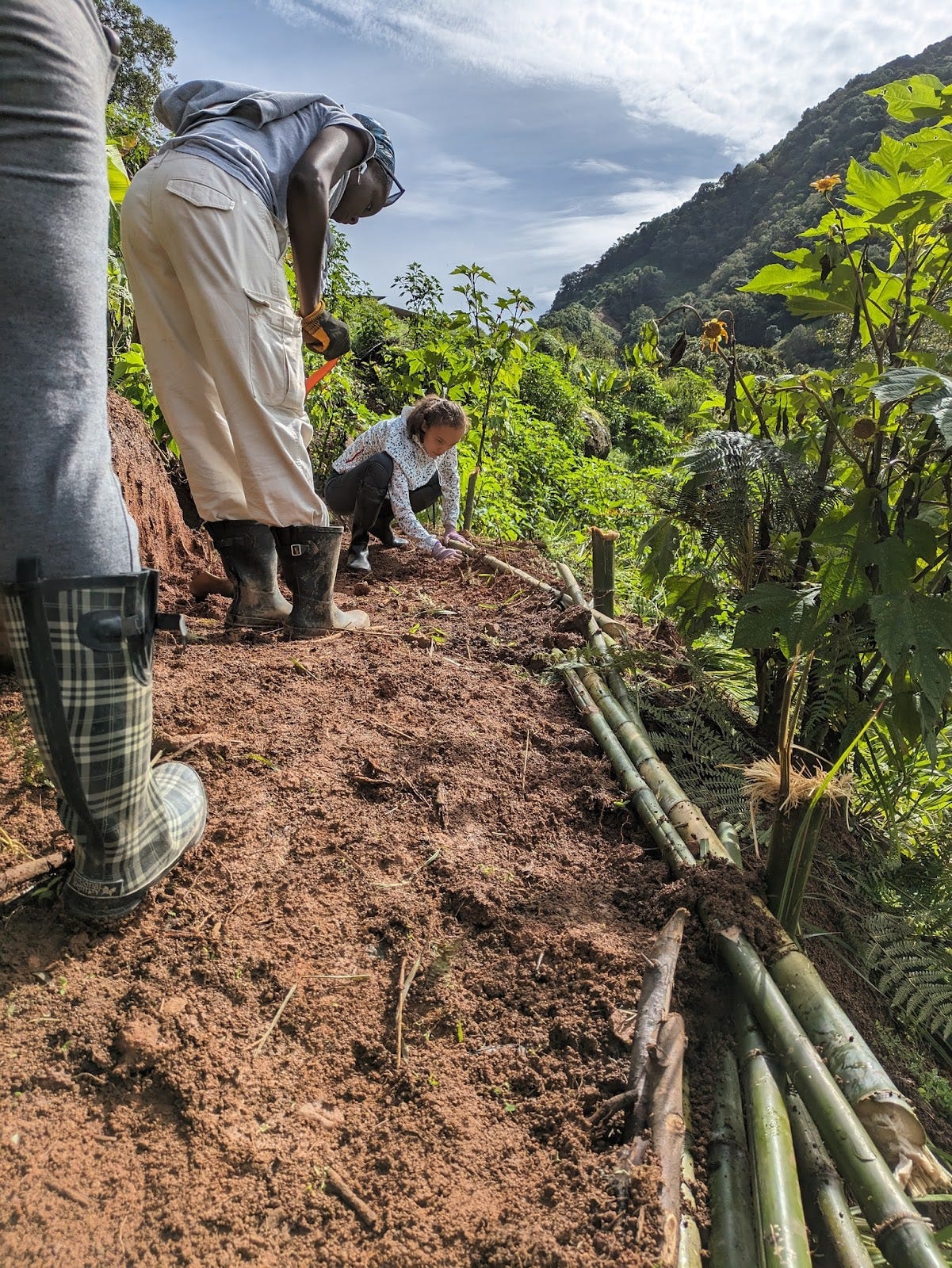
To address this, Green Communities trains farmers to use traditional terracing methods and build retention walls, techniques that I now understand are essential to protecting soil from erosion. Building terraces was physically intense work. It required observation, calculation, and a collective effort. But as I shaped the earth with my own hands, I realized that land restoration is an act of repair, not just of the soil, but of our relationship to it. I see that same ethos reflected in Soul Fire Farm’s mission to regenerate land as a form of racial and environmental justice. Penniman’s emphasis on African-Indigenous techniques like contour farming, cover cropping, and agroforestry underscores that the solutions we need are not new—they are ancient, time-tested, and rooted in the wisdom of people who have long been stewards of the land.
This chapter reminded me that soil is not just dirt—it is memory. It holds the imprint of what has been done to it and offers the possibility of healing when treated with care. Restoring degraded land is more than a technical task; it is spiritual, cultural, and political work. For me, it was a lesson in humility: to be a steward of the land is to recognize that our job is not to control nature but to participate in its cycles with respect.
In reflecting on both my time in Costa Rica and this chapter, I feel a renewed sense of responsibility. Whether in the mountains of Central America or at community gardens here in New York, the call is the same: to restore what has been stripped away, to relearn what has been forgotten, and to center justice in our relationship with the Earth. Healing the soil is healing ourselves.
Jayola Reid
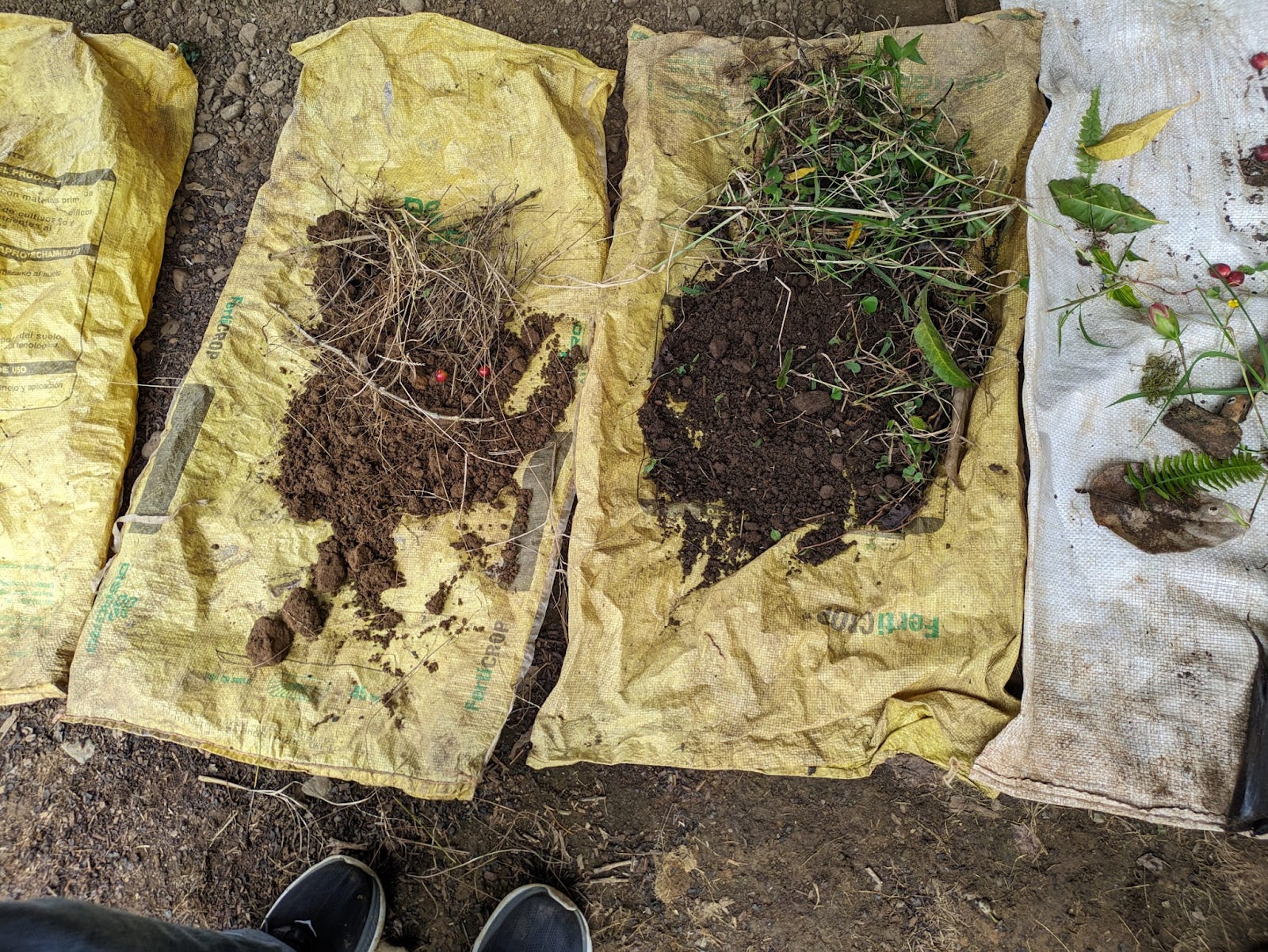
Photos below are from Jayola’s experience working with growers in Costa Rica
Soil comparisons
Terracing
In the garden,
Nailah & Succotash Team
This Substack is reader-supported. To receive new posts and support our work, consider becoming a free or paid subscriber.